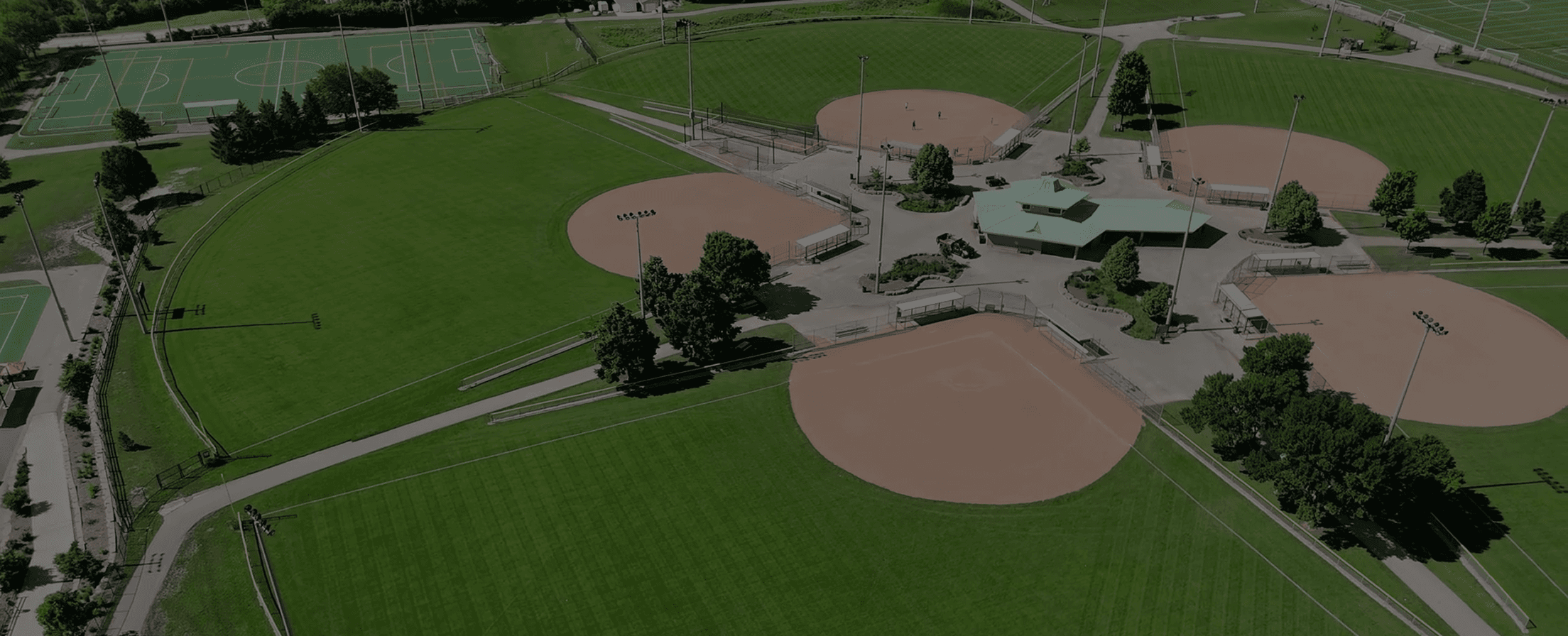
Langton Group deploys Driverless Commercial Mowers
The Sidekick driverless solution enables one operator to mow fields with two mowers. This helps professional landscapers reduce mowing crews from 3 people to 2 people, while improving safety and saving over 30% on mowing costs.
Background
Langton Group, a full-service Chicagoland Landscaping company with over $12 million in annual revenue, maintains many large public parks, elementary schools, highway medians, and forest preserves. Langton Group provides high-quality landscaping services, snow removal, and landscape construction. Being a midwestern landscaping company, Langton Group uses commercial mowers for about 650 to 700 hours per year.
Challenges & Opportunities
Profit Margins
When it comes to commercial landscaping services, Chicagoland is an extremely competitive market with thousands of landscaping businesses. Even small cost optimizations can make the difference between running a profitable business and just breaking even. In a typical landscaping company, labor accounts for over 50% of business costs. The rising costs of manual labor make it difficult to stay competitive. Over the last few years, Langton Group has been a leader in the utilization of cutting-edge technology that improves efficiency and increases profitability. To continue its rapid growth, Langton Group was searching for new ways to dramatically increase the efficiency of mowing operations without sacrificing safety or quality.
Hiring and Retaining the Best People
Due to the seasonal nature of landscaping services, many landscaping companies employ seasonal workers. More specifically, companies in the US employ over 300,000 seasonal landscaping workers. At the start of each season, staffing up quickly enough to handle contract obligations can be a challenge. Recruiting, training, and retaining skilled operators takes time and resources. It takes weeks to screen applications, interview candidates, check references, make an offer, and onboard new hires. Landscaping companies must offer incentives and career opportunities to attract and retain the best talent. However, for landscaping businesses, there is a delicate balance between paying more to employees and maintaining healthy profit margins. Langton Group was looking for new ways to offer career growth opportunities to employees while, at the same time, maintaining healthy profit margins and staying ahead of the competition.
Quality and Consistency
Not all grass is maintained in the same way. Langton Group uses the industry’s best practices for delivering high-quality, consistent results. Keeping up the high standards is not easy when mowing crews need to maintain many large worksites every day. Cutting corners is not an option. Langton Group was looking for tools that help mowing crews dramatically increase efficiency while maintaining the highest quality standards.
Searching for an Ideal Solution
Autonomous Commercial Mowers
Langton Group was very familiar with the various brands of autonomous commercial mowers. However, the deployment of ZTR autonomous mowers was not a good option for Langton Group due to several reasons:
Supervision Requirements: Langton Group maintains many high-traffic worksites, like elementary schools and public parks. Some of these worksites are very likely to have people during mowing operations. As a result, operators would need to scan the worksite before starting operations and then continue to supervise the mower while it is running. If the operator needs to spend a substantial amount of time supervising the mower, then the mower does not help increase efficiency.
Slower Speed: The speed of autonomous mowers is limited by the range and precision of their safety sensors. As a result, most autonomous ZTR mowers cannot match the speed and performance of human operators.
Frequent Changes to the Worksites: Fallen tree branches, toys left at the worksite, moved soccer goals, moved benches, grass-restoration areas, and flooded zones are just some of the real-world scenarios that autonomous commercial mowers can’t handle.
No Manual Work for the Operator: A significant portion of the worksites maintained by Langton Group, such as large parks and athletic fields, don’t have many areas that need trimming. As a result, there is no work that the operator can be doing while the autonomous mower is running. It is not efficient to ask the operator to stand at the worksite and wait for the autonomous mower to finish the work.
Batwing Mowers
Some Park Districts and landscaping companies utilize large batwing mowers that have a mowing width of 12 feet or even 16 feet. However, Langton Group was not interested in the use of batwing mowers for a few reasons:
High Cost: Due to the complex manufacturing process, there is an exponential increase in the cost of batwing mowers as the deck size increases. For example, a 144" Toro batwing mower costs around $80,000 - around 6 times the price of a 72" Toro mower.
Frequent Breakdowns: The wings of batwing mowers break down frequently from the stress and vibrations of mowing operations. Repairing these wings promptly requires owners to have spare parts, which can get very expensive.
Doesn't Work in Tight Spaces: Batwing mowers cannot be used in complex/tight areas of worksites and require users to bring a secondary, smaller, mower to finish the job.
Lower Cut Quality: Unlike zero-turn (ZTR) mowers, batwing mowers are not designed to produce stripes and are not great for athletic fields or any other areas that require top-quality lawncare.
Difficulty Transporting: Due to their large size, many batwing mowers don’t fit into standard trailers and take too long to transport on the roads. This makes it hard to utilize them across multiple worksites.
Sidekick™ Driverless Mowing Solution
Havenshine’s Sidekick solution allows one operator to control multiple commercial ZTR mowers simultaneously with precision, safety, and unmatched efficiency. Sidekick was designed for real-world commercial applications and presents unique advantages:
Multi-mower Autonomy: One lead operator can control several Sidekick-enabled mowers that mirror speed and position, eliminating the need for additional operators.
Human-level Safety: With 100-percent supervision, Sidekick is ideal for high-risk, high-traffic locations. While using Sidekick, operators can easily detect and remove obstacles and ensure that bystanders do not interfere with driverless operations.
Plug-and-Play Simplicity: Requires no setup, mapping or path-planning — just turn it on and mow. Perfect for dynamic and variable terrain.
Langton Group partnered with Havenshine to install 3 Sidekick™ systems on 6 Electric Mean Green commercial mowers:
Two Mean Green EVO 74” mowers were paired together using a Sidekick system
Two Mean Green Rival 60” mowers were paired together using a Sidekick system
And another pair of Mean Green Rival 60” mowers paired together using a Sidekick system
The driverless mowers were then deployed across hundreds of acres of elementary schools, public parks, forest preserves, and other large areas. The use of zero-emission electric mowers in public spaces helps companies reduce noise and improve air quality. These sustainability benefits are attractive for school districts and municipalities.
Initial Training Time
On average, it took new operators about 20-30 minutes to become proficient in the use of the Sidekick solution. Training was performed on real worksites and covered many topics such as starting a run, navigation patterns, supervision of mowers, obstacle detection, obstacle avoidance, transporting mowers between worksites, and handling of edge cases. Once operators were trained on how to use Sidekick in one worksite, they could seamlessly use it on any other compatible worksite.
"It is very easy to use"
Bryan - Operator from Langton Group -
describing Sidekick usage on his second run
Sidekick Performance Results
In 2025, the Sidekick mowers used by Langton Group travelled hundreds of miles in driverless mode and cleared hundreds of acres of grass. This section focuses on a few specific examples to illustrate the performance of the driverless Sidekick mowers.
Deer Path Elementary School in Cary, IL
On 10/12/25 at 9 am, the 74” EVO driverless Sidekick mower was used in Deer Path Elementary School in Cary, IL. The mower travelled a total distance of 1.43 miles (2.3km) in less than 15 minutes and produced about 0.87 acres with a production rate of 3.55 acres per hour. The production rate of the Sidekick pair was 7.1 acres per hour. The top speed of the driverless mower was 10.5 mph. Over 91% of the run had navigation accuracy better than 3”.
Larry Fink Memorial Park Soccer Fields in Highland Park, IL
On 10/07/25, at 9:30 am, a 74” EVO driverless mower was used in Larry Fink Memorial Park Soccer Fields in Highland Park, IL. The mower travelled 3.68 miles (5.93km) in 39 minutes and produced 2.3 acres, with 90% of the produced area having navigation accuracy better than 3”. With a top speed of 11mph, the production rate of the driverless Sidekick mower was 3.44 acres per hour. The production rate of the Sidekick pair was about 6.9 acres per hour.
In each of these worksites, the amount of required cleanup at the end of a Sidekick run is minimal – less than 10% of the time spent at the worksite. In large open areas, Sidekick has shown performance comparable to a professional human operator with production rates in the range of 3.5 acres per hour for 74” mowers and 2.5 acres per hour for 60” mowers.
But it is not just the large open worksites that Sidekick can be used on. Havenshine is actively working on allowing the Sidekick mowers to be utilized in complex environments with many obstacles. Even today, operators can use Sidekick around obstacles like trees without requiring any setup.
Sidekick-related Cost-Savings
Today, in the Chicago area, an experienced ZTR mower operator earns about $20 to $22 per hour. After considering overhead such as taxes, workers' comp insurance, and benefits, the overall compensation can be in the range of $25 to $30 per hour. When utilized in areas like large parks and elementary schools, Sidekick has about 90% of the efficiency of an experienced ZTR mower operator. In other words, Sidekick has a proven value of about $20 per hour.
The Sidekick solution costs $30,000 and comes with a 5-year limited warranty. A midwest landscaping company like Langton Group utilizes commercial ZTR mowers in large open spaces for about 650 hours per year. This means that Langton Group is effectively paying just $30,000 / (650 x 5) = $9.23 per hour to utilize the Sidekick driverless solution during a 5-year term. This is 54% less expensive when compared with manual human labor.
The customer unit economics are even more favorable for companies that operate commercial mowers in warmer climates (1,100+ hours per year). In the best-case scenario, if the Sidekick solution is used for 5 years at 1,100 hours per year, it would cost just $5.45 per hour.
With these savings, Sidekick delivers a substantial return on investment without sacrificing safety or quality of mowing operations.
Conclusions
By deploying Sidekick mowers, Langton Group was able to accomplish several important outcomes:
Substantially reduce costs of open-area mowing (by as much as 54%) without sacrificing safety or quality.
Position Langton Group for rapid growth in the Midwest and other US markets.
Create new career opportunities for mower operators by helping them transition from laborers to supervisors of semi-autonomous mowers.
Access powerful data that comes from Sidekick-equipped mowers to improve quality, fleet routing, and better predict run-times.
Havenshine is excited to support Langton Group as they increase utilization of the Sidekick -equipped mowers and build a 21st century landscaping business.
If you are as innovative as Langton Group and are looking for ways to run your mowers at $9 per hour without sacrificing safety and quality, then reach out to Havenshine for your free consultation.
For questions about this case study, please email info@havenshine.com. Independent verification of this case study is also available from Langton Group and Automated Outdoor Solutions.